
For a long time, tool use was considered a uniquely human trait. The ability to pick up an object and use it to solve a problem was seen as a clear boundary between humans and the rest of the animal kingdom. Modern research has steadily dismantled that idea. Across forests, savannas, oceans, and even city environments, animals have been observed using tools in surprisingly sophisticated ways. From primates shaping sticks to birds crafting hooks, tool use is now recognized as a widespread and fascinating aspect of animal behavior.
What Counts as Tool Use?
Before exploring examples, it is important to clarify what scientists mean by “tool use.” In behavioral biology, a tool is typically defined as an external object that an animal manipulates to achieve a specific goal, such as obtaining food, defending itself, or modifying the environment.
This definition excludes simple actions like sitting on a rock or using the ground as a surface. True tool use involves intentional manipulation and a clear functional outcome. By this standard, many animals qualify as tool users, even if their methods differ from human techniques.
Primates: The Classic Tool Users
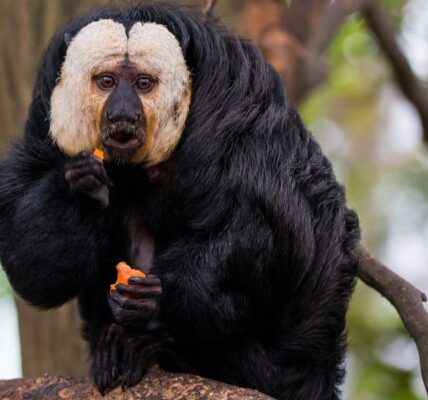
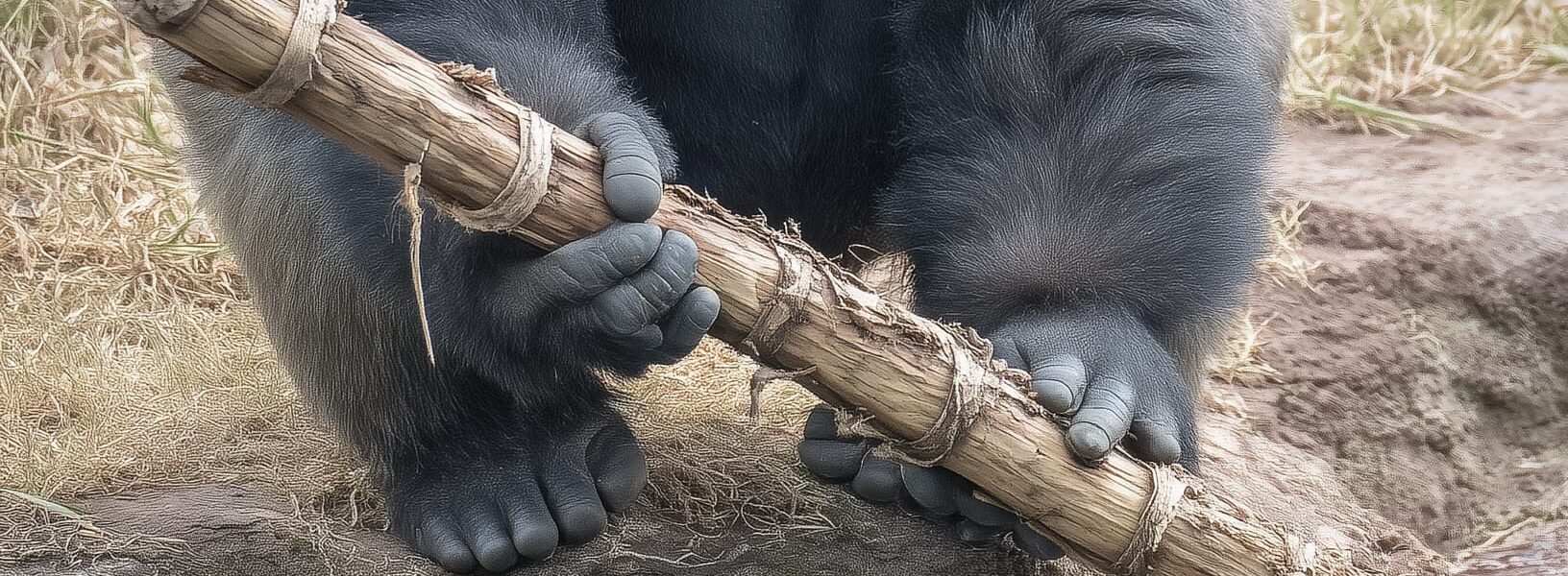
Primates were among the first animals recognized for tool use, and they remain some of the most studied examples. Chimpanzees are particularly famous in this regard. In the wild, they use sticks to “fish” for termites, inserting them into mounds and pulling them out covered in insects. Some populations even modify sticks by stripping leaves or shaping the ends, suggesting a degree of planning.
Capuchin monkeys offer another remarkable example. They use stones as hammers and anvils to crack open hard nuts. These monkeys select stones of appropriate size and weight, carry them over distances, and reuse favored tools repeatedly. This behavior is learned socially, passed from one generation to the next.
Great apes such as orangutans have also been observed using leaves as gloves to handle spiny fruit or hot surfaces, and as makeshift umbrellas during rain. These behaviors demonstrate flexibility and problem-solving rather than instinct alone.
Birds: Masters of Innovation
Birds may not have hands, but many have compensated with impressive ingenuity. Among the most striking examples are New Caledonian crows. These birds create tools by shaping twigs and leaves into hooks that help them extract insects from crevices. In laboratory settings, they have solved multi-step problems requiring the use of one tool to retrieve another.
What makes these crows especially interesting is their ability to manufacture tools rather than simply pick them up. Some individuals adjust the length or shape of a tool depending on the task, showing a level of foresight once thought to be exclusively human.
Other bird species also display tool use. Egyptian vultures use stones to crack open ostrich eggs. Woodpecker finches in the Galápagos Islands use cactus spines to pry insects from tree bark. These behaviors appear in environments where food is difficult to access, suggesting that ecological pressure plays a key role in the development of tool use.
Marine Tool Users: Intelligence Beneath the Surface
Tool use is not limited to land animals. In the ocean, several species demonstrate surprising object manipulation. Sea otters are perhaps the most well-known marine tool users. They float on their backs and use rocks as anvils to break open shellfish placed on their chests. Some otters even keep favorite stones tucked into folds of skin under their arms for repeated use.
Dolphins have also shown remarkable examples of tool use. In Shark Bay, Australia, certain bottlenose dolphins wear marine sponges over their snouts while foraging along the seafloor. This behavior protects them from sharp objects and helps them disturb hidden prey. The practice is culturally transmitted, passed from mothers to offspring.
Octopuses, often celebrated for their intelligence, have been observed collecting coconut shells or other debris and using them as portable shelters. This kind of future-oriented behavior challenges traditional ideas about invertebrate cognition.
Insects and Unexpected Tool Users
Even small-brained animals sometimes surprise researchers. Ants use leaves to transport liquids through capillary action. Some species of wasps use pebbles to pack soil around their nests, improving structural stability. While these behaviors may be more rigid than those seen in mammals or birds, they still meet criteria for tool use under many scientific definitions.
These examples highlight that tool use does not require a large brain, but rather the right combination of ecological need, learning capacity, and physical ability.
Learning, Culture, and Innovation
One of the most important discoveries in the study of animal tool use is the role of learning and culture. In many species, tool use is not innate. Young animals learn by observing experienced individuals. This social transmission leads to local traditions, where certain tool-using behaviors appear in some populations but not others of the same species.
Chimpanzee communities, for example, differ in the tools they use depending on region. These differences cannot be explained solely by genetics or environment, pointing instead to cultural variation.
Innovation also plays a role. New tool behaviors sometimes emerge when animals encounter novel challenges. Urban birds using cigarette butts or wire fragments, and monkeys opening containers left by humans, show how flexible animal cognition can be.
What Tool Use Tells Us About Animal Minds
Tool use offers valuable insight into how animals think. It suggests problem-solving abilities, memory, and in some cases, planning. However, scientists are careful not to assume that animal tool use reflects human-like reasoning. Instead, they study the specific cognitive processes involved, such as trial-and-error learning, imitation, and environmental feedback.
Importantly, tool use challenges the idea of a sharp divide between human and animal intelligence. Instead, it supports a continuum, with different species displaying different combinations of cognitive skills.
Why This Matters
Understanding animal tool use has implications beyond curiosity. It informs conservation efforts by highlighting the cognitive complexity of species and the importance of preserving not just individuals, but also social structures and habitats that support learning.
It also reshapes how humans view their relationship with other animals. Recognizing tool use in diverse species encourages a more respectful and nuanced perspective on animal behavior and intelligence.
Conclusion
From primates shaping sticks to birds crafting hooks and marine animals wielding stones and sponges, tool use is a widespread and dynamic phenomenon in the animal kingdom. These behaviors reveal adaptability, learning, and problem-solving abilities that were once thought to belong only to humans.
As research continues, the list of tool-using animals is likely to grow. Each new discovery deepens our understanding of animal minds and reminds us that intelligence takes many forms across the natural world.